Preface – Why Performance Management Matters
Think of performance management as your plant’s GPS. Without it, you might still move forward, but you’ll probably take wrong turns, waste resources, and arrive late. This process isn’t just HR slang it’s the backbone of how businesses grow, adapt, and keep their teams motivated.
Breaking Down the Concept
At its heart, performance management is about ensuring employees know what’s expected, are equipped to meet those expectations, and are recognized for their efforts.
How it Impacts Business Growth
When done right, it boosts productivity, sharpens skills, and strengthens company culture. In other words, it’s a win-win for both the business and its people.
What’s the Performance Management Cycle?
The Description in Simple Terms
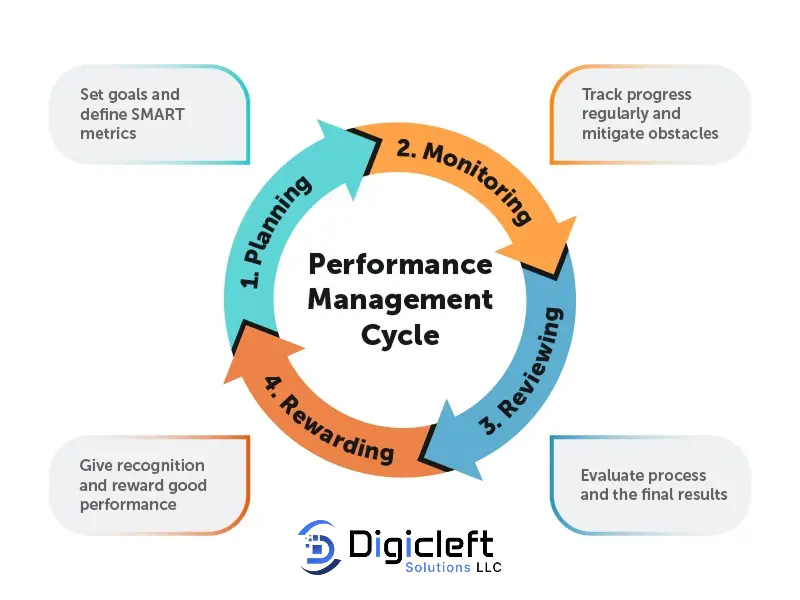
The performance management cycle is a structured, ongoing process that helps organizations align employee objectives with overall business goals.
The Crucial Role it Plays in Workplaces
It’s not a once-a-year review it’s a continuous discussion, helping teams stay focused, adaptable, and motivated all year long.
Stage 1 – Planning
Setting SMART Goals
SMART goals are Specific, Measurable, Attainable, Relevant, and Time-Bound. Instead of saying “Improve sales,” a SMART goal would be “Increase sales revenue by 15% in Q3 through targeted social media campaigns.”
Aligning Goals with Company Vision
Individual performance should contribute to the company’s bigger picture like puzzle pieces forming a complete image.
Stage 2 – Monitoring
Tracking Progress in Real Time
Regular check-ins help identify obstacles early, preventing small issues from snowballing into big problems.
The Power of Feedback
Feedback is the engine that keeps performance moving forward.
- Formative Feedback: Guides improvement without damaging morale.
- Criticism without guidance: Often stalls progress.
Stage 3 – Developing
Training and Skill Building
Employees need the right tools to excel. Training bridges the gap between current skills and future demands.
Mentoring and Coaching for Growth
One-on-one mentorship creates a safe space for learning, problem-solving, and career planning.
Stage 4 – Reviewing
Performance Appraisals
Formal reviews assess how well employees have met their goals, but they should be a continuation of ongoing conversations, not a surprise.
360-Degree Feedback Approach
This method gathers input from managers, peers, and even clients offering a well-rounded view of performance.
Stage 5 – Rewarding
Recognition Programs
Publicly acknowledging great work motivates employees and reinforces positive behavior.
Financial vs. Non-Financial Rewards
Sometimes a bonus works best; other times, flexible hours, extra leave, or career growth opportunities are more effective.
Common Mistakes in Performance Management
- Ignoring Regular Check-ins: Waiting until the end of the year for feedback is like only checking your GPS after missing your exit.
- Setting Unrealistic Expectations: Ambitious goals are great, but impossible ones only lead to burnout and frustration.
Best Practices to Master the Cycle
Using Technology for Performance Tracking
Performance management tools streamline goal tracking, feedback, and reporting saving time and increasing accuracy.
Creating a Culture of Openness
When employees feel safe sharing ideas and challenges, the entire team benefits.
The Role of Digicleft Solution in Performance Management
Digicleft Solution offers digital tools and strategies that simplify the performance management cycle. From tracking KPIs to enabling real-time feedback, it ensures every stage is executed effectively helping businesses stay agile and competitive.
Conclusion – Turning Performance Management into Success
The performance management cycle isn’t just an HR checklist it’s the secret sauce to building motivated teams, achieving company goals, and staying ahead in competitive markets. By planning, monitoring, developing, reviewing, and rewarding effectively, you create an environment where both the business and its people thrive.
FAQs
1. What is the main purpose of performance management?
To align employee performance with business goals while encouraging growth and motivation.
2. How often should performance reviews be conducted?
Ideally, feedback should be ongoing with formal reviews quarterly or bi-annually.
3. Can small businesses use a performance management cycle?
Absolutely. It’s scalable for any organization size.
4. What’s the difference between feedback and appraisal?
Feedback is ongoing guidance; an appraisal is a formal performance review.
5. How can Digicleft Solution improve performance management?
By providing tools for real-time tracking, seamless communication, and data-driven insights.