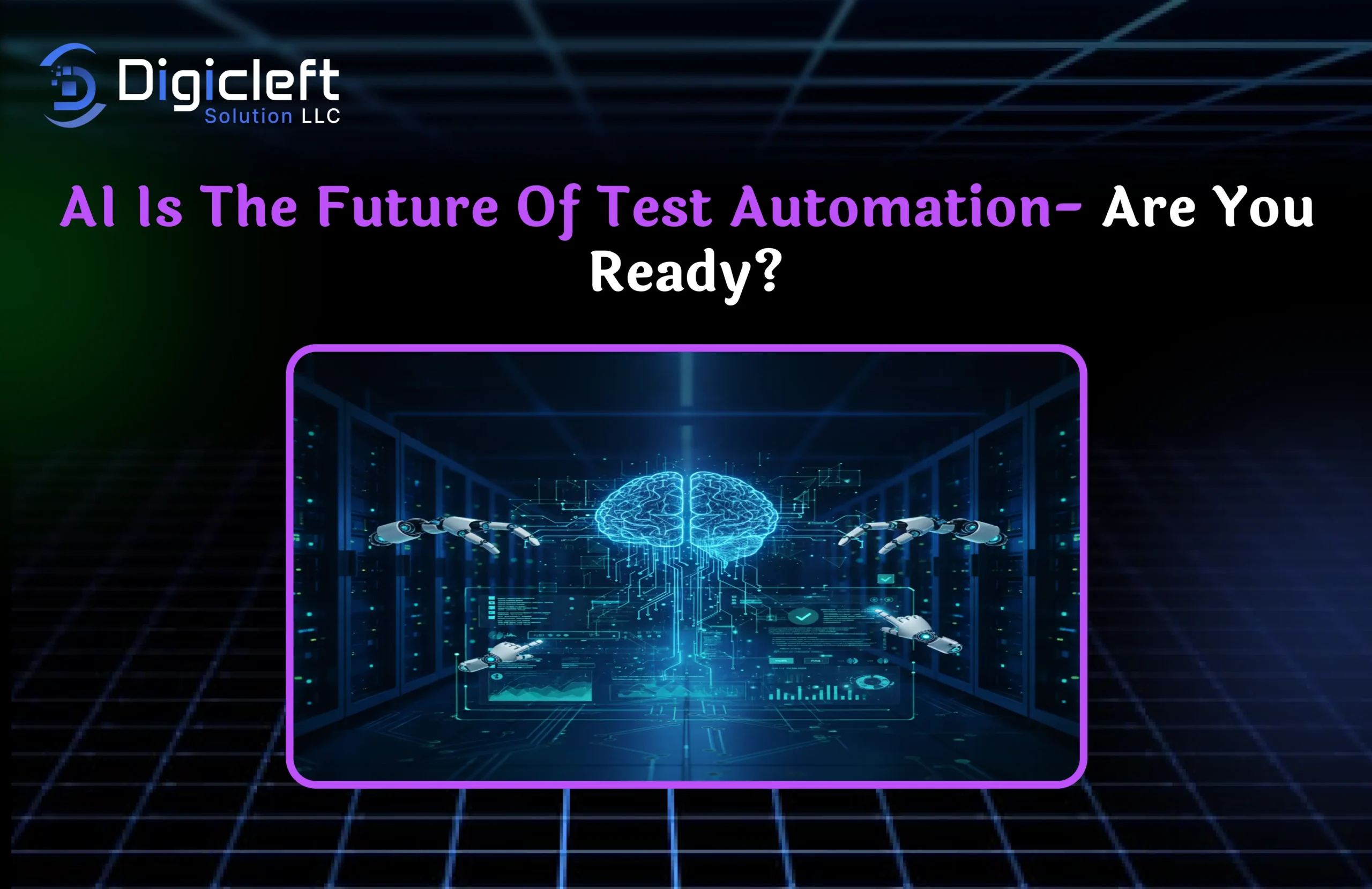
Let’s face it testing has come a long way. There was a time when QA teams spent endless hours running repetitive test cases, establishing results, and hunting bugs manually. But now, with products evolving faster than ever, the old ways just don’t cut it.
Enter Artificial Intelligence (AI) the game-changer that’s redefining what “smart testing” truly means. But here’s the real question are you ready for it?
The Evolution of Test Automation
Before AI stepped in, automation was already reshaping testing. Tools like Selenium and QTP helped reduce manual effort, yet they still required heavy scripting, constant updates, and human intervention.
Now, we’ve reached a new phase AI-powered automation, where systems don’t just execute tasks; they learn, adapt, and improve over time.
What Exactly Is AI in Test Automation?
Think of AI in testing as a teammate who never gets tired. It analyzes test data, identifies patterns, and predicts where bugs might appear often before they actually do.
Unlike traditional automation, which follows rigid scripts, AI-driven tools evolve based on previous test outcomes. They detect changes in code and automatically adjust test scripts no more “broken tests” every time a developer tweaks a button or label.
Why AI is the Future of Testing
AI’s ability to learn, predict, and optimize makes it the natural next step for quality assurance.
Imagine this a testing system that not only runs tests but tells you which tests matter most, predicts where defects are likely to occur, and even repairs itself when scripts fail. That’s not the future it’s happening right now.
How AI Transforms the Testing Lifecycle
AI doesn’t just automate it enhances every phase of the testing lifecycle:
- Test Case Generation: Tools like Testim and Functionize analyze user stories and automatically create relevant test cases.
- Defect Prediction: Based on historical defect data, AI predicts where bugs are likely to appear.
- Test Script Maintenance: With self-healing automation, scripts automatically update when UI elements change. No manual rework needed.
Machine Learning in Testing
Machine Learning (ML) is the brain behind AI testing. By analyzing past test runs, ML algorithms identify recurring defects, prioritize test cases, and even predict future issues.
For example, ML can learn that login features tend to break after every third release and ensure they’re tested more thoroughly next time.
Natural Language Processing (NLP) in Testing
This is where testing gets even more human. Thanks to NLP, testers can write commands in plain English like “verify the login button works on all browsers.” The AI tool translates this into executable scripts.
This makes automation accessible to non-coders and democratizes the testing process across teams.
AI and Continuous Testing in DevOps
In DevOps environments, speed is everything. AI ensures that testing keeps up with rapid deployment cycles by integrating seamlessly with CI/CD pipelines.
AI-driven systems monitor performance in real time, detect anomalies instantly, and send feedback to developers dramatically reducing time-to-market.
Benefits of AI-Driven Test Automation
Let’s break down why teams love AI-driven testing:
- Speed: Faster test execution with minimal setup.
- Accuracy: Eliminates human error and inconsistency.
- Scalability: Handles large datasets and multiple environments effortlessly.
- Cost Savings: Reduces manual work and rework.
- Insights: Offers predictive analytics that guide smarter testing.
With companies like Digicleft Solution, these benefits go beyond theory. They’ve been implementing AI-powered QA frameworks that accelerate delivery cycles while maintaining top-notch quality.
Challenges of Implementing AI in Testing
Sure, AI sounds perfect but it’s not magic. The effectiveness of AI depends heavily on data quality. Poorly labeled or inadequate training data can mislead models.
Then there’s the trust factor testers often struggle to rely entirely on machine decisions. It’s crucial to maintain a balance between human oversight and automation intelligence.
Is AI Replacing Testers?
Here’s the truth AI isn’t replacing testers; it’s upgrading them.
AI takes over repetitive, mechanical tasks so testers can focus on creative problem-solving, exploratory testing, and strategic thinking. Think of AI as your tireless assistant, not your replacement.
Practical Applications of AI in Testing
- Visual Testing: Detects UI inconsistencies pixel by pixel.
- Test Optimization: Prioritizes test cases that matter most.
- Self-Healing Scripts: Automatically update when the app’s UI changes.
These applications reduce downtime and help teams achieve continuous quality assurance.
Real-World Use Cases
Leading companies like Digicleft Solution are already leveraging AI to supercharge their testing efforts.
By integrating AI-based predictive analytics and NLP-driven automation, Digicleft has reduced regression testing time by nearly 40%. Their systems now self-adjust, detect anomalies, and deliver real-time reports with minimal human input.
Preparing Your Team for AI-Driven Testing
AI in testing isn’t a plug-and-play solution it’s a mindset shift. Start by upskilling your team in:
- Data literacy (understanding how AI learns)
- Tool proficiency (Testim, Mabl, Functionize, etc.)
- AI ethics and trust management
Partnering with forward-thinking companies like Digicleft Solution can also help bridge technical and cultural gaps.
The Future of Testing: Human-AI Collaboration
The best testing ecosystems blend human intuition with AI precision. AI can predict issues, but only humans can interpret the context and business impact.
The future of testing will revolve around collaboration, not competition where machines handle data, and humans handle decisions.
Conclusion
AI isn’t just another buzzword it’s the backbone of next-generation testing. Whether it’s predicting defects, generating intelligent scripts, or maintaining test suites autonomously, AI is changing the QA game for good.
The question isn’t whether AI will transform testing it’s whether you’re ready to embrace it. And if you want a head start, following innovators like Digicleft Solution might just give you the edge.
FAQs
- How does AI differ from traditional test automation?
AI-driven testing adapts and learns from data, while traditional automation follows static, rule-based scripts. - Can AI testing tools work without coding knowledge?
Yes. Tools using NLP allow testers to write cases in plain English, making automation accessible to all. - What’s the biggest challenge in AI-based testing?
Data quality and model training are crucial. Poor data leads to inaccurate predictions. - Will AI replace human testers entirely?
No — it enhances their capabilities by automating repetitive tasks and freeing time for creative problem-solving. - Which industries benefit most from AI test automation?
Tech, finance, healthcare, and e-commerce basically, any sector relying on frequent updates and high reliability.