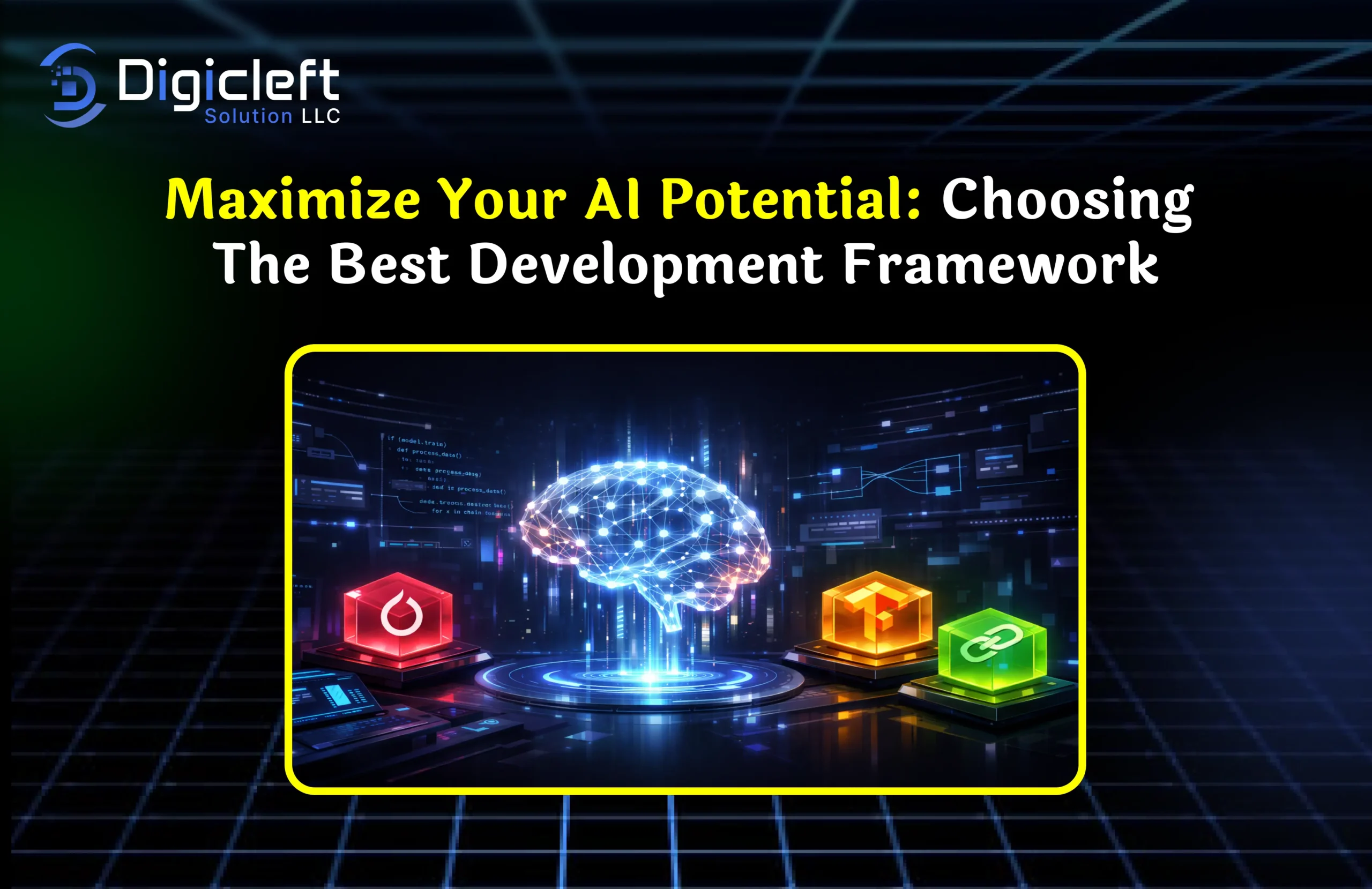
Preface to AI Development Frameworks
Artificial intelligence isn’t magic it’s engineering. And just like a skilled carpenter chooses the right tools, AI builders need the right framework to bring ideas to life. The framework you choose can either accelerate your AI ambitions or slow them down with technical bottlenecks.
Let’s break it down in plain English.
What Is an AI Development Framework?
An AI development framework is the backbone of your AI project. It’s a collection of libraries, tools, and pre-built components that help developers design, train, test, and deploy AI models without reinventing the wheel.
Think of it like a fully equipped kitchen. You could cook with random tools, or you could use a space where everything is organized and within reach. Frameworks make AI development faster, structured, and scalable.
Why Framework Choice Matters More Than Ever
AI is evolving at lightning speed. Choosing the wrong framework today can create technical debt tomorrow. The right framework, however, helps you scale easily, adapt quickly, and remain competitive.
Understanding Your AI Goals First
Before touching any framework, pause and ask yourself: What am I really trying to build?
Business vs Research-Oriented AI Systems
Business-focused AI requires stability, scalability, and smooth deployment. Research projects demand flexibility and experimentation. One framework does not fit all.
Scalability, Speed, and Long-Term Vision
Are you building a quick prototype or a long-term AI platform? Some frameworks shine in rapid experimentation, while others dominate production environments.
Matching Frameworks to Real-World Use Cases
Recommendation engines, chatbots, fraud detection, and predictive analytics all have different framework sweet spots.
Key Factors to Consider When Choosing an AI Framework
Ease of Use and Learning Curve
If your team struggles to learn the framework, productivity drops period. A framework should feel intuitive, not restrictive.
Community Support and Ecosystem
Strong communities mean faster troubleshooting, frequent updates, and abundant tutorials. A quiet ecosystem is a red flag.
Performance and Flexibility
Performance matters when models scale. Flexibility matters when requirements change and they always do.
Documentation and Learning Resources
Good documentation is like a GPS for developers. Without it, you’re navigating blind.
Popular AI Development Frameworks Explained
TensorFlow – Power and Production Readiness
TensorFlow is a heavyweight framework built for scale. Widely used in enterprise environments, it’s powerful but can feel complex for beginners.
PyTorch – Flexibility for Experimentation
Loved by researchers, PyTorch feels natural and Pythonic. It excels in experimentation and is increasingly production-ready.
Scikit-learn – Simplicity for Classical Machine Learning
If you’re working with traditional machine learning models, Scikit-learn is clean, simple, and highly effective.
Keras – Rapid Prototyping Made Easy
Built on top of TensorFlow, Keras focuses on speed and simplicity. It’s ideal for quick proofs of concept.
Frameworks for Specialized AI Needs
Natural Language Processing (NLP)
Libraries like Hugging Face Transformers dominate NLP, making sentiment analysis and text generation significantly easier.
Computer Vision
OpenCV, Detectron2, and YOLO-based frameworks excel at image and video processing.
Reinforcement Learning
Frameworks like Ray RLlib manage complex decision-making systems, especially in robotics and simulations.
Open-Source vs Proprietary Frameworks
Pros and Cons of Open-Source Frameworks
Open-source frameworks offer flexibility, transparency, and cost savings. The trade-off is managing updates and security yourself.
When Proprietary Solutions Make Sense
Proprietary platforms simplify deployment and support, but may lock you into vendor ecosystems.
AI Frameworks for Startups vs Enterprises
Startup-Friendly Framework Characteristics
Startups need speed, flexibility, and low cost. Lightweight frameworks with cloud compatibility are essential.
Enterprise-Grade Requirements
Enterprises prioritize security, compliance, and scalability. Stability often outweighs experimentation.
Cloud, Deployment, and MLOps Compatibility
Cloud-Native AI Frameworks
Frameworks that integrate seamlessly with AWS, Azure, or Google Cloud simplify scaling and deployment.
Edge and On-Premise Deployment
Some use cases require low latency and offline processing. Not every framework supports edge deployment effectively.
MLOps and CI/CD Integration
Modern AI doesn’t stop at training. Deployment, monitoring, and retraining pipelines are just as critical.
Security, Compliance, and Ethical AI
Data Privacy and Model Governance
Frameworks should support secure data handling and compliance with regulations such as GDPR.
Responsible AI Practices
Bias detection, explainability, and transparency are no longer optional they’re expected.
How Digicleft Solutions Helps Maximize AI Potential
Choosing an AI framework isn’t just a technical decision it’s a strategic one. That’s where Digicleft Solutions comes in.
Strategic AI Framework Consulting
Digicleft Solutions helps businesses align AI frameworks with real goals, focusing on outcomes rather than trends.
End-to-End AI Development Support
From framework selection to deployment and optimization, Digicleft Solutions supports the entire AI lifecycle.
Common Mistakes to Avoid
- Chasing trends instead of choosing the right fit
- Ignoring team skill alignment
- Underestimating long-term maintenance
Future-Proofing Your AI Stack
Keeping Up with Rapid AI Evolution
Frameworks evolve fast. Choose those that adapt quickly and remain relevant over time.
Building Modular Architectures
Modular systems make it easier to switch tools without rebuilding everything from scratch.
Conclusion: Choosing Smart Today for Smarter AI Tomorrow
The best AI framework isn’t the most popular it’s the one that fits your goals, team, and vision. With the right framework and a trusted partner like Digicleft Solutions, you’re not just building AI you’re building the future.
FAQs
1. What is the best AI development framework for beginners?
Scikit-learn and Keras are excellent starting points due to their simplicity and strong documentation.
2. Is PyTorch better than TensorFlow?
Neither is universally better. PyTorch excels in flexibility, while TensorFlow shines in production scalability.
3. How important is community support?
Extremely important. Strong communities mean faster problem-solving and continuous improvement.
4. Can I switch frameworks later?
Yes, but it can be costly. Planning ahead saves time and resources.
5. How does Digicleft Solutions help with framework selection?
Digicleft Solutions aligns technical choices with business goals for long-term success.