
Electronic Health Record (EHR) systems are the beating heart of modern healthcare. From managing patient data to integrating telemedicine tools, the architecture behind an EHR system determines how reliable, scalable, and secure it becomes. Choosing the right architecture is not just a technical decision it directly impacts patient safety, doctor productivity, and even hospital profitability.
Why Architecture Matters in Healthcare Technology
Think of software architecture like the foundation of a hospital building. If it’s strong and well-designed, everything above it stands firm. If not, cracks appear quickly. Healthcare applications handle sensitive data and must comply with strict regulations, making it essential to balance speed, flexibility, and airtight security.
The Growing Demand for Scalable EHR Systems
Healthcare is evolving rapidly. Clinics now rely on remote consultations, AI-driven analytics, and real-time patient monitoring. These trends push developers to build EHR platforms that can scale easily without sacrificing performance.
Understanding Monolithic Architecture
What Is Monolithic Architecture?
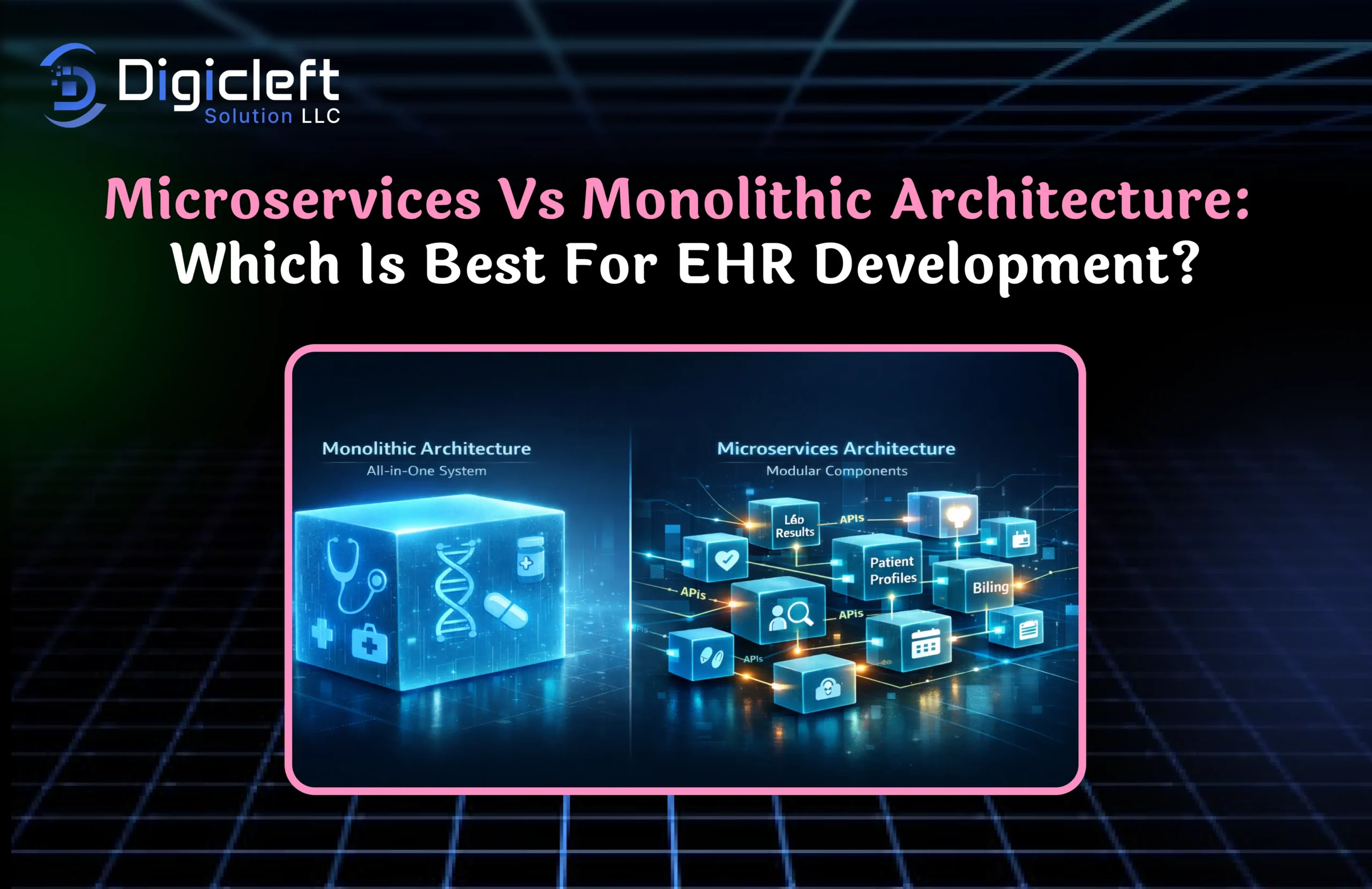
A monolithic application is built as a single unified system. All features patient records, billing, appointment scheduling exist within one large codebase. Everything is tightly coupled, functioning as a single unit.
Key Characteristics of Monolithic Systems
- Single codebase and deployment
- Shared database
- Unified development process
- Centralized control
Advantages of Monolithic Architecture
Monolithic applications are simpler to build initially. Developers can launch quickly, manage everything in one place, and avoid complex service communication. For small EHR platforms, this simplicity can be a major advantage.
Challenges and Limitations
As systems grow, monolithic architecture becomes harder to maintain. Even a minor update may require redeploying the entire application. Scaling individual features is difficult, which can slow innovation.
Exploring Microservices Architecture
What Are Microservices?
Microservices architecture breaks an application into smaller, independent services. Each service handles a specific function such as patient management, analytics, or authentication and communicates through APIs.
Core Components of Microservices
- Independent modules
- API-based communication
- Containerization and cloud deployment
- Automated scaling
Benefits of Microservices in Healthcare
Microservices allow developers to update features without affecting the entire system. This flexibility supports rapid innovation, easier third-party integrations, and efficient resource scaling based on demand.
Potential Downsides to Consider
Microservices require strong DevOps expertise and advanced monitoring. Managing multiple services increases system complexity, and without proper planning, service communication can become difficult to manage.
Key Differences Between Microservices and Monolithic Architecture
Development Speed and Flexibility
Monolithic systems are faster to launch but slower to evolve. Microservices require more upfront planning but allow faster updates and enhancements over time.
Scalability and Performance
Microservices excel at scalability. Only the components that need additional resources such as appointment booking during peak hours can be scaled, rather than the entire system.
Maintenance and Updates
Updating a monolithic application can feel like renovating an entire building to fix one room. Microservices enable small, targeted updates without disrupting the rest of the system.
Security and Compliance
Both architectures can be secure when implemented correctly. Microservices provide granular security controls for each service, while monolithic systems rely on centralized security management.
Why Architecture Choice Matters for EHR Development
Patient Data Management Needs
EHR platforms manage massive volumes of data lab reports, consultation records, and imaging files. A scalable architecture ensures fast and reliable access to this information.
Integration with Telemedicine and Healthcare Tools
Modern EHRs must integrate with wearables, billing systems, and telehealth platforms. Microservices simplify integration by allowing new modules to be added without disrupting existing systems.
Regulatory Compliance Challenges
Healthcare regulations demand strict data protection and audit trails. Choosing the right architecture simplifies compliance features such as role-based access control and encryption.
When Monolithic Architecture Works Best for EHR Systems
Small Clinics and Startups
For a simple EHR system serving a single clinic, monolithic architecture can be sufficient. It is cost-effective and easier for small teams to manage.
Limited Budget or Simple Requirements
Early-stage systems often focus on quick deployment. Monolithic design allows developers to deliver a functional product without heavy infrastructure costs.
When Microservices Are the Better Choice
Large Hospitals and Multi-Location Healthcare Providers
Hospitals managing thousands of patients daily require systems that scale effortlessly. Microservices support high traffic and complex workflows with ease.
Systems Requiring Continuous Innovation
Microservices are ideal for platforms planning to adopt AI diagnostics, predictive analytics, or advanced integrations.
Real-World Use Cases in Healthcare Development
Many modern healthcare platforms are moving toward microservices to support telemedicine and AI capabilities. Meanwhile, smaller startups often begin with monolithic systems to test ideas quickly before scaling.
Cost Comparison: Microservices vs Monolithic
Monolithic applications have lower initial costs due to simpler infrastructure and fewer resources. Microservices may appear more expensive at first because of cloud services and DevOps requirements, but their long-term scalability and maintainability can reduce operational costs.
Future Trends in EHR Architecture
The future points toward hybrid approaches that combine the simplicity of monolithic systems with the scalability of microservices. Cloud-native technologies and containerization are reshaping how EHR systems are built and deployed.
How Digicleft Solution Approaches Modern EHR Development
Development teams increasingly adopt flexible architectures tailored to each healthcare organization’s needs. The Digicleft Solution approach prioritizes scalability, regulatory compliance, and seamless integration. Instead of enforcing a single architecture, developers analyze workflows, patient volume, and future growth before making architectural decisions.
Final Verdict: Which Architecture Is Best for EHR Development?
There is no one-size-fits-all answer. Monolithic architecture suits smaller, simpler EHR systems that require fast deployment. Microservices are ideal for large healthcare networks seeking scalability, flexibility, and continuous innovation.
Conclusion
Choosing between microservices and monolithic architecture is like deciding between building a small clinic or a large medical campus. Both serve important purposes depending on goals. Start simple when requirements are limited, and go modular when planning rapid growth and advanced capabilities. The key is aligning your architecture with your healthcare organization’s future not just its present.
FAQs
- Is microservices architecture always better for healthcare applications?
No. It depends on system complexity, team expertise, and long-term goals. - Are monolithic EHR systems outdated?
Not at all. Many organizations still use them effectively. - Which architecture is more secure?
Both can be secure when implemented correctly. - Can a monolithic EHR system be converted to microservices?
Yes, with careful planning and phased migration. - What is the most important factor when choosing EHR architecture?
Scalability, integration needs, compliance requirements, and long-term business goals.