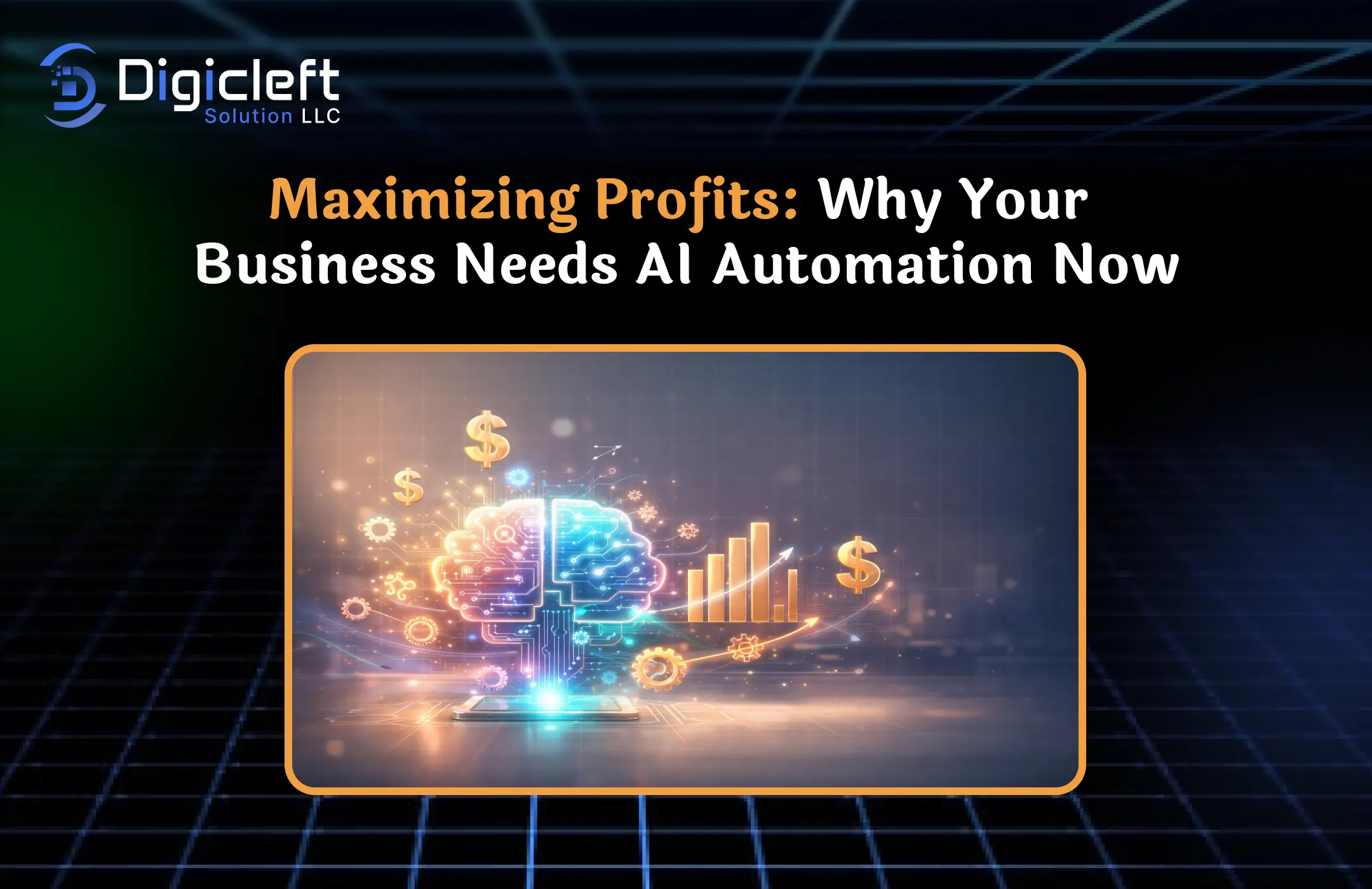
AI automation isn’t just another buzzword floating around in tech circles it’s quickly becoming the backbone of modern business operations. At its core, AI automation refers to using artificial intelligence to perform tasks without constant human input, especially repetitive or data-heavy activities.
Think of it as upgrading your business with a digital brain that never sleeps, never slows down, and continuously learns.
What makes AI automation different from traditional automation is its ability to adapt. Traditional systems follow fixed rules, but AI evolves. It learns patterns, improves results, and makes smarter decisions over time. That’s why businesses are moving beyond simple automation tools and investing heavily in AI-driven workflows.
The shift is happening faster than most people realize. Around 78% of enterprises are already using AI in at least one function, and adoption continues to rise rapidly. This means AI is no longer optional — it’s becoming a standard requirement for staying competitive.
How Businesses Are Using AI in 2026
In 2026, AI is no longer limited to tech giants. Small and medium businesses are actively integrating it into daily workflows. From chatbots handling customer queries to AI tools generating marketing content, automation is everywhere.
Businesses are using AI in multiple ways:
- Automating customer support with chatbots resolving up to 80% of routine queries
- Enhancing sales processes with AI-driven lead scoring
- Streamlining financial reporting and forecasting
- Automating content creation and SEO workflows
One major example comes from customer service, where AI doesn’t just reduce workload — it improves performance. Companies report significantly shorter response times and higher customer satisfaction simply by implementing AI assistants.
The Real ROI of AI Automation
Cost Savings and Efficiency Gains
Let’s talk numbers because at the end of the day, profit is what matters.
AI automation delivers measurable financial impact. Businesses implementing AI report 26% to 55% productivity gains and an average return of $3.70 for every $1 invested. That’s not a small improvement — it’s a complete shift in operational efficiency.
In real-world case studies, companies achieved median savings of $142,000 annually, with payback periods as short as 4.2 months.
Why AI delivers strong returns:
- Time wasted on repetitive tasks
- Human errors leading to expensive mistakes
- Delays in decision-making
AI eliminates these problems by working continuously, processing data instantly, and executing tasks with precision.
Revenue Growth Through AI
AI is not just about cutting costs it actively increases revenue.
Businesses using AI in sales and marketing report significant growth. Some companies have seen sales increase by more than 40% after implementing AI assistants.
AI improves:
- Lead qualification accuracy
- Customer targeting precision
- Personalization at scale
AI allows businesses to engage customers at the right time, with the right message, every time. That level of consistency is nearly impossible to achieve manually.
Key Benefits of AI Automation
1. Increased Productivity
Studies show that 86% of organizations report improved productivity after adopting AI tools. AI handles repetitive tasks like data entry, scheduling, and reporting, freeing teams to focus on strategy and growth.
2. Reduced Human Error
AI minimizes errors by following consistent logic and analyzing data with precision. This leads to better decision-making and reduced risk.
3. Faster Decision-Making
AI processes massive datasets in seconds, providing insights that would take humans hours or even days to analyze.
Industries Being Transformed by AI
Marketing and Sales Automation
Marketing has experienced a massive transformation thanks to AI. From automated email campaigns to predictive analytics, AI is redefining how businesses attract and convert customers.
Customer Support Transformation
AI chatbots and virtual assistants handle routine queries instantly, reducing wait times and improving customer satisfaction.
AI Automation vs Traditional Processes
| Factor | Traditional Process | AI Automation |
|---|---|---|
| Speed | Slow and manual | Instant execution |
| Accuracy | Prone to errors | High precision |
| Cost | High operational cost | Reduced long-term cost |
| Scalability | Limited | Easily scalable |
Challenges Businesses Face Without AI
Falling Behind Competitors
Businesses that delay AI adoption risk becoming irrelevant. Competitors using AI operate faster, smarter, and more efficiently.
Rising Operational Costs
Manual processes are expensive. Without AI, businesses face increasing labor costs and inefficiencies that reduce profits.
How to Implement AI Automation
1. Identify Repetitive Tasks
Start by identifying tasks that consume time but do not require creativity. These are ideal candidates for automation.
2. Choose the Right Tools
Focus on solutions that integrate with your existing systems and deliver measurable ROI.
3. Scale Gradually
Begin with small implementations, measure results, and scale based on success.
The Role of Digicleft Solutions in AI Integration
This is where Digicleft Solutions plays a crucial role. Businesses often focus on AI tools but ignore the foundation — their website.
An engaging, high-performing website is essential for maximizing AI impact. AI-powered websites can:
- Personalize user experiences
- Automate lead capture
- Improve conversion rates
Future of AI Automation: What to Expect by 2030
AI is expected to contribute trillions to the global economy, with significant impacts on productivity and growth. Businesses adopting AI early will have a major advantage.
Experts predict that AI could boost productivity growth by more than 4% in the coming decade, transforming entire industries.
Conclusion
AI automation is no longer a futuristic concept — it’s a present-day necessity. Businesses that embrace it are seeing higher efficiency, increased revenue, and stronger competitive positioning.
The real question isn’t whether you should adopt AI — it’s how quickly you can implement it.
FAQs
1. What is AI automation in business?
AI automation uses artificial intelligence to perform tasks automatically, improving efficiency and reducing manual work.
2. Is AI automation expensive to implement?
Initial costs vary, but most businesses achieve positive ROI within months due to cost savings and efficiency gains.
3. Can small businesses benefit from AI?
Yes, AI tools are now accessible and affordable, making them valuable for businesses of all sizes.
4. Does AI replace human jobs?
AI complements human work by handling repetitive tasks, allowing employees to focus on higher-value activities.
5. How do I start with AI automation?
Begin with small tasks, choose the right tools, and scale gradually based on results.