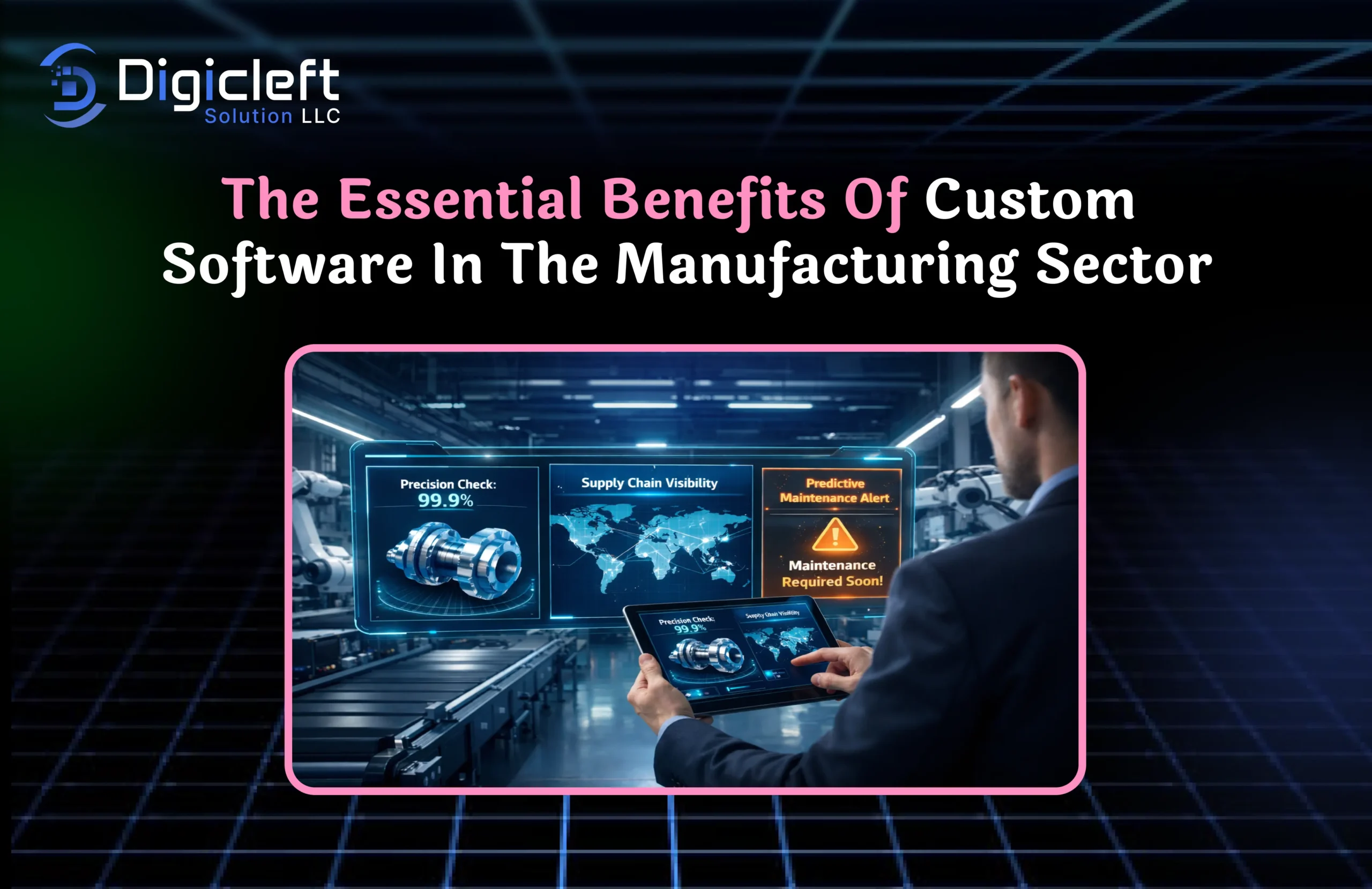
Manufacturing is no longer just about machines, assembly lines, and raw materials. It’s about data, automation, intelligence, and speed. Today, manufacturers are under constant pressure to produce faster, smarter, and more efficiently while maintaining quality and reducing costs.
That’s where custom software comes in. Unlike off-the-shelf solutions, custom software is designed specifically for your business processes, challenges, and goals. It fits your manufacturing operations like a tailored suit not a one-size-fits-all jacket.
If you’ve ever felt frustrated by software that almost works but never truly matches your workflow, you’re not alone. Custom software completely changes that story.
What Is Custom Software?
Custom software is a digital solution developed specifically for a particular organization or industry. Instead of adapting your business to generic software, you adapt software to your business.
Think of it like building your own factory machine instead of buying a generic one. You design it to match your production line, speed, and unique requirements.
In Manufacturing, Custom Software Can Include:
- Production management systems
- Inventory and supply chain tools
- Quality control platforms
- IoT and machine monitoring solutions
- ERP and workflow automation tools
Why Manufacturing Needs Digital Transformation
The manufacturing sector is evolving faster than ever. Industry 4.0, smart factories, IoT, AI, and automation are reshaping how products are made.
Traditional systems simply can’t keep up with modern demands.
The Evolution of Manufacturing Technology
Manufacturing has moved from manual labor to mechanization, then to automation, and now to digital intelligence. Custom software is the backbone of this evolution.
From Legacy Systems to Smart Factories
Legacy systems are rigid, slow, and disconnected. Smart factories, powered by custom software, are flexible, data-driven, and responsive.
Key Challenges Faced by Manufacturing Companies
Inefficient Processes
Manual workflows and outdated tools slow down production and increase errors.
Data Silos
Different departments use different systems, making data sharing difficult.
Scalability Issues
As businesses grow, generic software struggles to adapt.
How Custom Software Solves Manufacturing Problems
Tailored Automation
Automation designed for your workflow reduces manual work and boosts efficiency.
Real-Time Data Integration
Custom systems connect machines, departments, and data sources in real time.
Workflow Optimization
Processes become smoother, faster, and more predictable.
Improved Operational Efficiency
Streamlined Production
Custom software eliminates unnecessary steps and optimizes production lines.
Reduced Manual Errors
Automation reduces human mistakes, improving accuracy and reliability.
Imagine a factory where every process flows seamlessly like a well-conducted symphony. That’s the power of custom software.
Enhanced Productivity and Performance
Empowered Workforce
With the right tools, employees perform better. Custom dashboards, analytics, and automation help teams work smarter, not harder.
Faster Decision-Making
Real-time insights enable managers to make quick, informed decisions.
It’s like switching from guessing to knowing.
Cost Optimization and ROI
Many manufacturers hesitate to invest in custom software due to initial costs. However, long-term benefits far outweigh the investment.
Long-Term Savings
Custom software reduces inefficiencies, downtime, and redundant tools.
Reduced Reliance on Multiple Tools
Instead of paying for multiple software subscriptions, you get one integrated solution.
Quality Control and Compliance
Quality Monitoring
Custom software tracks quality standards in real time, ensuring consistency.
Regulatory Compliance
Manufacturers must comply with industry regulations. Custom software simplifies compliance tracking and reporting.
Think of it as a digital quality inspector working 24/7.
Scalability and Flexibility
Adapting to Market Changes
Custom software grows with your business, allowing new features and integrations as needed.
Future-Proof Solutions
Unlike rigid off-the-shelf tools, custom software is built for long-term adaptability.
Seamless Integration with Existing Systems
Manufacturers often use ERP, CRM, and IoT platforms. Custom software connects everything into one unified ecosystem.
Enhanced Customer Experience
Faster Delivery
Optimized production and logistics lead to quicker order fulfillment.
Customization Capabilities
Manufacturers can offer personalized products and services more easily.
Happy customers lead to stronger brand loyalty.
Competitive Advantage in the Market
In today’s competitive manufacturing landscape, technology is a key differentiator.
Innovation and Differentiation
Custom software enables innovation, efficiency, and agility, helping manufacturers outperform competitors relying on generic tools.
Role of Digicleft Solution in Custom Manufacturing Software
Digicleft Solution plays a pivotal role in helping manufacturers design, develop, and implement custom software tailored to their operational needs.
- Optimize workflows
- Enhance productivity
- Improve data visibility
- Achieve digital transformation
Future Trends in Manufacturing Software
- Artificial Intelligence and Machine Learning
- Industrial IoT (IIoT)
- Predictive Maintenance
- Digital Twins
- Smart Automation
- Cloud-Based Manufacturing Systems
Conclusion
Custom software is no longer a luxury it’s a necessity for manufacturers. It improves efficiency, boosts productivity, reduces costs, enhances quality, and creates a competitive edge.
With the right partner like Digicleft Solution, the journey toward digital transformation becomes smoother, smarter, and more impactful.
FAQs
1. Why is custom software better than off-the-shelf solutions?
Because it’s tailored to specific manufacturing processes and scales with business growth.
2. Is custom software expensive?
Initial costs may be higher, but long-term ROI and efficiency gains make it cost-effective.
3. How long does development take?
Typically a few months to a year, depending on complexity.
4. Can it integrate with existing systems?
Yes, it integrates seamlessly with ERP, CRM, and IoT platforms.
5. How does Digicleft Solution help?
By delivering tailored development, integration, and digital transformation services.