
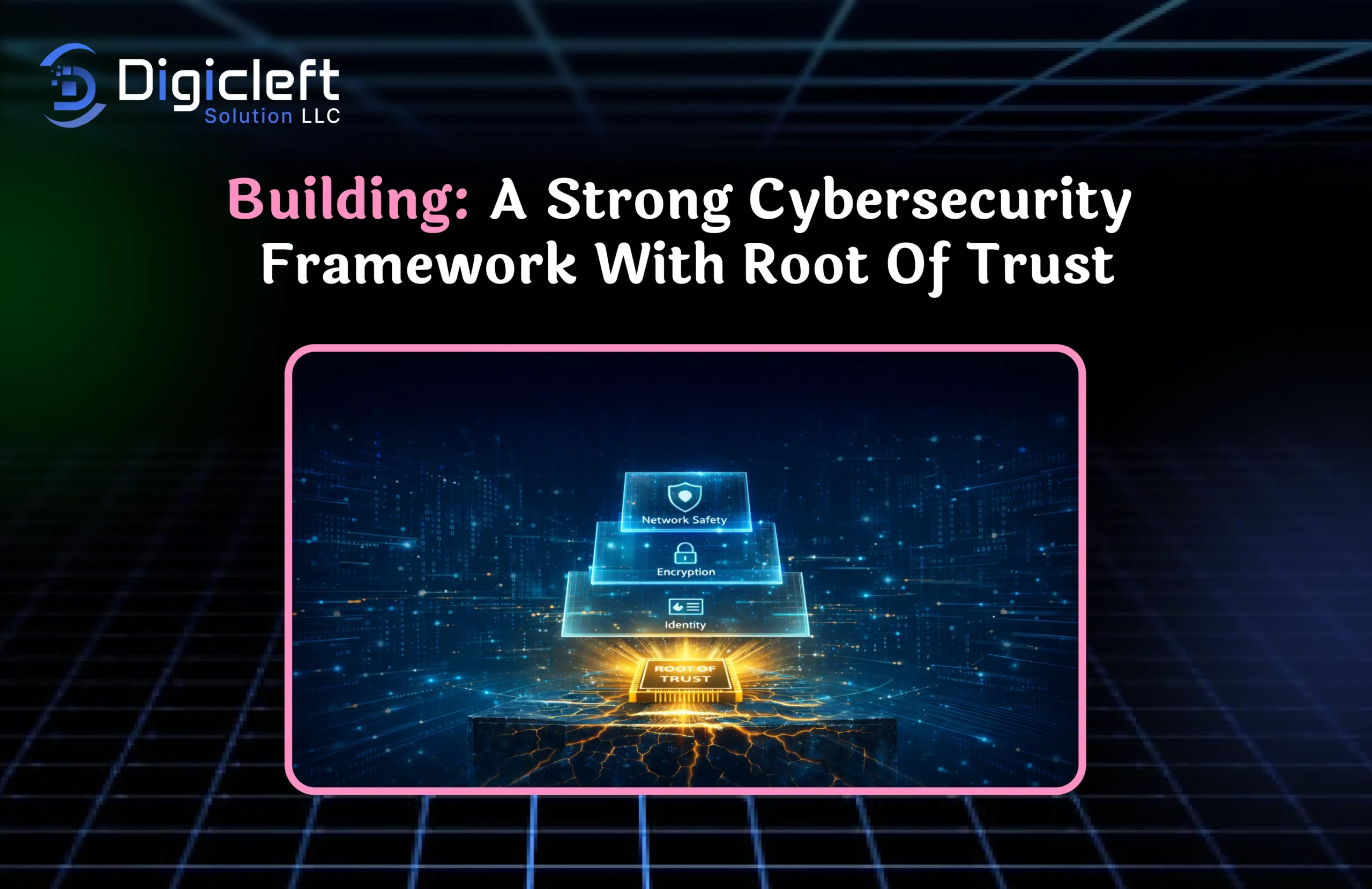
Cybersecurity today feels like locking your front door in a neighborhood where criminals now use drones, lock-picking robots, and can even guess your Wi-Fi password. The threats are smarter, faster, and more persistent. Traditional security methods are struggling to keep up.
So what’s the real solution?
It starts at the very core — the Root of Trust.
Let’s break this down in simple terms and build a cybersecurity framework that doesn’t just respond to threats but prevents them from gaining ground in the first place.
Why Traditional Security Models Are Failing
For years, businesses relied on perimeter-based security: firewalls, antivirus software, and network barriers. Think of it as building a tall fence around your property.
But here’s the problem — attackers don’t always come through the front gate anymore. They slip in through compromised devices, firmware vulnerabilities, phishing emails, insider threats, or unsecured cloud services.
The perimeter has disappeared.
With remote work, cloud computing, and IoT devices, everything is connected. Once an attacker gets inside, lateral movement across systems becomes easy.
The Rising Cost of Cyberattacks
Cyberattacks are not just technical issues — they are financial disasters. Data breaches cost millions. Ransomware shuts down operations. Trust evaporates overnight.
Reputation damage is often harder to recover from than the financial loss.
Building a strong cybersecurity framework is no longer optional — it is foundational.
What Is a Root of Trust?
Definition and Core Concept
At its simplest, a Root of Trust is a trusted starting point within a system. It is the anchor. The foundation. The one component assumed to be secure so the rest of your security architecture can build on it.
Imagine building a house. If the foundation cracks, everything above it becomes unstable. The same concept applies here.
The Root of Trust verifies that your hardware, firmware, and software have not been tampered with before they even begin running.
Hardware vs. Software Root of Trust
There are two primary types:
Hardware Root of Trust
Embedded directly into hardware components. It is physically secured and significantly harder to compromise.
Software Root of Trust
Relies on cryptographic verification within software code. It offers flexibility but can be more vulnerable than hardware-based solutions.
Trusted Platform Module (TPM)
A Trusted Computing Group standard component known as the Trusted Platform Module (TPM) is a hardware chip that securely stores cryptographic keys.
During system boot, it verifies system integrity.
If anything has been altered, the system detects it immediately.
Secure Enclaves
Secure enclaves create isolated environments within processors. Sensitive data remains protected — even if the main operating system is compromised.
That isolation is powerful.
Why Root of Trust Is the Foundation of Cybersecurity
Establishing System Integrity
Before your operating system loads, the Root of Trust checks whether everything is authentic. No unauthorized changes. No malicious firmware.
It’s like checking identification before allowing entry into a private event.
Preventing Unauthorized Access
When cryptographic keys are stored securely in hardware, attackers cannot easily extract or duplicate them.
Without those keys, access is denied.
Key Components of a Strong Cybersecurity Framework
A Root of Trust is critical framework but it must be part of a larger ecosystem.
Identity and Access Management (IAM)
Who has access to what?
Strong IAM ensures users access only what they truly need. Multi-factor authentication adds another layer of protection.
The principle of least privilege is essential.
Data Encryption Strategies
Encryption protects data at rest and in transit.
Even if data is intercepted, it is useless without the decryption key — and those keys are protected by your Root of Trust.
Continuous Monitoring
Threats evolve daily.
Continuous monitoring ensures anomalies are detected in real time not weeks later during damage control.
Incident Response Planning
Even the best systems need backup plans.
A well-defined incident response strategy ensures your team reacts quickly and effectively when something goes wrong.
Integrating Root of Trust into Your Security Framework
Secure Boot Process
Secure boot ensures that only trusted software runs during startup.
Each component verifies the next in a chain of trust. If one link fails, the process stops.
Simple. Powerful. Effective.
Firmware Protection
Framework Steps is often overlooked and attackers know this.
A hardware Root of Trust verifies firmware integrity before execution, preventing silent tampering.
Device Authentication
In enterprise and IoT networks, device identity matters.
Root of Trust ensures every device proves its authenticity before joining the network.
No impostors allowed.
Root of Trust in Cloud and IoT Environments
Cloud Infrastructure Security
Cloud workloads are dynamic. Containers launch and shut down constantly.
Embedding Root of Trust principles ensures workloads are verified before deployment, creating trust in environments where infrastructure is not physically visible.
IoT Device Protection
IoT devices are notorious weak points.
From smart sensors to industrial controllers, every device must validate its firmware and identity. Root of Trust ensures compromised devices do not become entry points.
Zero Trust vs. Root of Trust
Understanding the Difference
Zero Trust is a security philosophy: “Never trust, always verify.”
Root of Trust is a technical mechanism that establishes trust at the hardware or system level.
They are not competitors.
They are partners.
How They Work Together
Root of Trust ensures systems start securely.
Zero Trust ensures every action afterward is continuously verified.
Together, they create a layered and resilient defense model.
Real-World Use Cases
Financial Sector
Banks protect massive volumes of transaction data.
Hardware-based Roots of Trust help prevent malware from altering transaction systems.
Healthcare Industry
Medical devices must operate without compromise.
Secure boot and device authentication prevent life-threatening tampering.
Enterprise IT Environments
Enterprises use Root of Trust to secure laptops, servers, and cloud instances — preventing firmware-level attacks.
Common Mistakes to Avoid
Overlooking Hardware Security
Many organizations focus only on software framework updates.
If hardware is compromised, everything above it becomes vulnerable.
Ignoring Firmware Updates
Even trusted hardware requires updates.
Neglecting firmware patches creates backdoors attackers exploit.
Step-by-Step Guide to Building Your Framework
Step 1: Risk Assessment
Identify critical assets. Evaluate potential threats. Understand vulnerabilities.
No guesswork.
Step 2: Implement Root of Trust
Deploy hardware-based trust anchors where possible. Enable secure boot. Protect cryptographic keys.
Build from the core outward.
Step 3: Policy Development
Create access policies, encryption standards, and monitoring protocols.
Security is not just technical it is procedural.
Step 4: Continuous Improvement
Review regularly. Test frequently. Adapt quickly.
Cybersecurity is never static.
The Role of Digicleft Solutions in Strengthening Cybersecurity
Implementing a strong cybersecurity framework requires expertise and strategic alignment.
Digicleft Solutions helps businesses integrate hardware-backed security mechanisms, identity management controls, and secure infrastructure design to establish a reliable Root of Trust foundation.
It’s not just about installing tools.
It’s about designing a security architecture that scales, adapts, and evolves with your organization.
Future Trends in Root of Trust and Cybersecurity
AI-Driven Threat Detection
Artificial intelligence framework enhances anomaly detection and predictive threat modeling.
Combined with hardware trust anchors, AI becomes even more powerful.
Quantum-Resistant Cryptography
Quantum computing may challenge traditional encryption.
Future-ready Root of Trust systems are already exploring quantum-resistant algorithms.
Security must think ahead.
Conclusion
Building a strong cybersecurity framework with Root of Trust is not a luxury anymore.
It is the foundation.
If your security base is not trusted, everything built on top is fragile. But when you anchor your infrastructure with hardware-backed trust, implement strict identity controls, encrypt intelligently, and monitor continuously, you create a system that resists attacks at every layer.
Security is not about fear.
It is about confidence.
And confidence starts at the root.
FAQs
1. What is the main purpose of a Root of Trust?
It establishes a secure foundation by verifying system integrity before software executes.
2. Is hardware Root of Trust better than software?
Hardware-based trust is generally more secure because it is physically isolated from software-level attacks.
3. How does Root of Trust support Zero Trust architecture?
It ensures devices and systems start from a verified state before continuous Zero Trust verification takes place.
4. Can small businesses implement Root of Trust?
Yes. Many modern devices include built-in hardware security features that small businesses can leverage.
5. Why is firmware security important?
Firmware operates below the operating system. If compromised, attackers can bypass traditional security controls.