Preface to the New AI Era
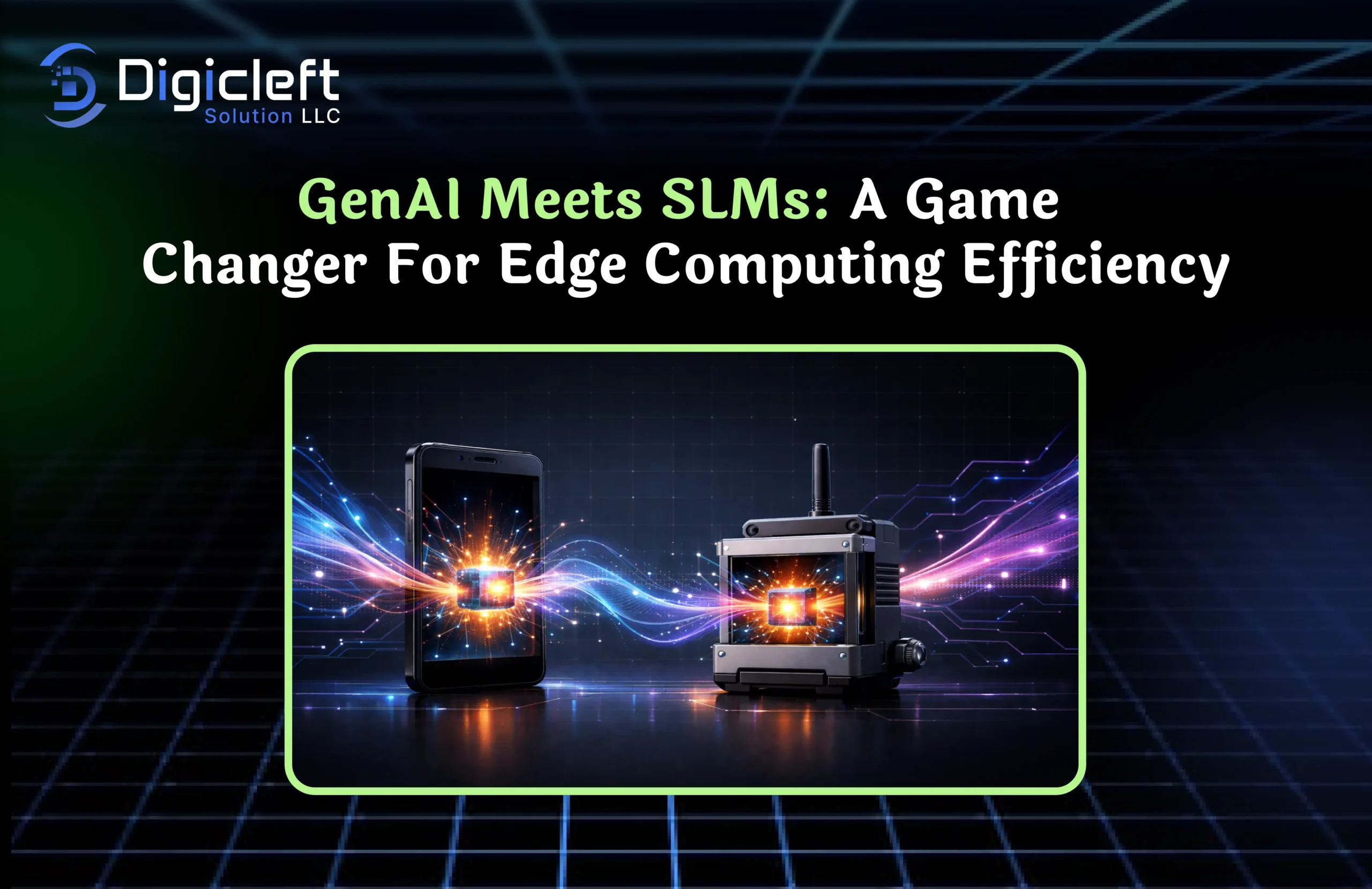
Let’s be honest artificial intelligence is no longer knocking on the door. It has already stepped inside, rearranged the furniture, and made itself comfortable. From chatbots to predictive analytics, AI is everywhere. What’s even more exciting is what’s happening beneath the surface: Generative AI (GenAI) is meeting Small Language Models (SLMs), and together they are transforming edge computing efficiency in ways we couldn’t imagine just a few years ago.
Why Everyone Is Talking About Generative AI
Generative AI, or GenAI, is the creative engine of modern technology. It can write, design, predict, and even reason. Think of it as the storyteller of the AI world capable of generating text, images, code, and insights on demand.
Traditionally, GenAI has lived in large cloud environments, far from where data is actually created. This distance has limited its real-time usefulness in many applications.
The Rise of Edge Computing
Edge computing flips the traditional model. Instead of sending data to distant servers, processing happens right where the data is generated on devices, sensors, or local servers. This reduces latency, saves bandwidth, and improves data privacy.
The challenge? Edge devices don’t have unlimited computing power. That’s where innovation becomes essential.
Understanding the Core Concepts
What Is Generative AI (GenAI)?
GenAI refers to AI systems that create new content rather than just analyzing existing data. These models learn patterns and generate new outputs such as drafting emails, summarizing reports, or predicting machine failures before they happen.
What Are Small Language Models (SLMs)?
SLMs are compact and efficient versions of large language models. They are designed to deliver meaningful intelligence without consuming massive computational resources.
SLMs vs Large Language Models
Large models are like cruise ships powerful but heavy and slow to turn. SLMs are speedboats: fast, agile, and perfect for environments where efficiency matters more than brute force. This makes them ideal for edge computing use cases.
Why Edge Computing Needs a Revolution
Latency Problems
Sending data back and forth to the cloud takes time. In real-world applications like autonomous vehicles or medical monitoring, milliseconds matter. Delays can mean failure or worse.
Bandwidth and Cost Challenges
Streaming massive volumes of data to the cloud is expensive. Bandwidth costs increase rapidly, especially for video, audio, and sensor-heavy systems.
Privacy and Security Concerns
Sensitive data traveling across networks increases exposure. Local data processing reduces risk and helps organizations comply with privacy regulations.
GenAI Meets SLMs: The Perfect Match
Lightweight Intelligence at the Edge
By combining GenAI capabilities with the efficiency of SLMs, edge devices gain intelligence without being overwhelmed. It’s like giving a smartwatch the brain of a data center without draining the battery.
Real-Time Decision Making
SLMs enable GenAI-driven insights to be delivered instantly. No round trips to the cloud. Decisions are made exactly where and when they are needed.
Reduced Cloud Dependence
Cloud services still matter, but they are no longer the bottleneck. Edge systems become more autonomous, flexible, and cost-effective.
How This Combination Improves Efficiency
Faster Inference
SLMs process information quickly, allowing GenAI responses in near real time critical for time-sensitive applications.
Lower Power Consumption
Smaller models consume less energy, making them ideal for battery-powered devices.
Optimized Resource Usage
Edge devices can now handle intelligent workloads without overheating or crashing, ensuring stable and efficient performance.
Real-World Use Cases
Smart Cities
AI-powered traffic and infrastructure systems adapt in real time, reducing congestion and emissions.
Healthcare and Wearables
Wearable devices analyze health data locally and deliver instant alerts without sending sensitive information to the cloud.
Manufacturing and Industry 4.0
Predictive maintenance becomes faster and more accurate when intelligence lives directly on factory floors.
Retail and Customer Experience
From smart shelves to personalized offers, edge AI enables seamless and responsive shopping experiences.
The Role of Digicleft Solutions in Edge AI Innovation
Bridging GenAI and SLMs
Digicleft Solutions specializes in aligning GenAI capabilities with lightweight SLM infrastructures, making edge AI deployments practical and scalable.
Custom Edge Deployments
Every business is unique. Digicleft Solutions designs tailored edge AI systems that meet specific operational needs.
Scalable and Secure Infrastructure
Security, performance, and scalability are built into the core not added as an afterthought.
Challenges and Limitations
Model Accuracy vs Size
Smaller models may sacrifice some depth. The key is finding the right balance between performance and efficiency.
Hardware Constraints
Not all edge devices are equal. Optimization is critical for success.
Maintenance and Updates
Managing updates across thousands of devices requires intelligent orchestration.
The Future of GenAI and SLMs at the Edge
Autonomous Systems
Drones, robots, and autonomous machines will increasingly rely on edge-based intelligence.
Hyper-Personalized AI
AI will adapt to individuals in real time, directly on their devices.
Edge-to-Cloud Collaboration
The future isn’t edge or cloud it’s a seamless combination of both.
Why Businesses Should Act Now
Competitive Advantage
Early adopters move faster, smarter, and more efficiently.
Cost Efficiency
Reduced cloud usage leads to lower operational costs.
Sustainability Benefits
Efficient computing consumes less energy, supporting greener technology initiatives.
Conclusion
When GenAI meets SLMs, edge computing finally receives the intelligence boost it has been waiting for. This powerful combination delivers speed, efficiency, privacy, and scalability without heavy dependence on the cloud. With innovators like Digicleft Solutions leading the way, the future of edge AI looks smarter, leaner, and more human than ever.
FAQs
- What makes SLMs ideal for edge computing?
Their compact size, low power consumption, and fast inference make them perfect for constrained environments. - Can GenAI run on edge devices?
Yes. When paired with SLMs, GenAI can be efficiently deployed at the edge. - How does this impact data privacy?
Local processing reduces exposure and improves compliance with privacy regulations. - Is cloud computing becoming obsolete?
No. The future is a hybrid edge-to-cloud model. - How does Digicleft Solutions support edge AI adoption?
By delivering secure, scalable, and customized GenAI–SLM deployments tailored to business needs.