
What Does AI Really Mean?
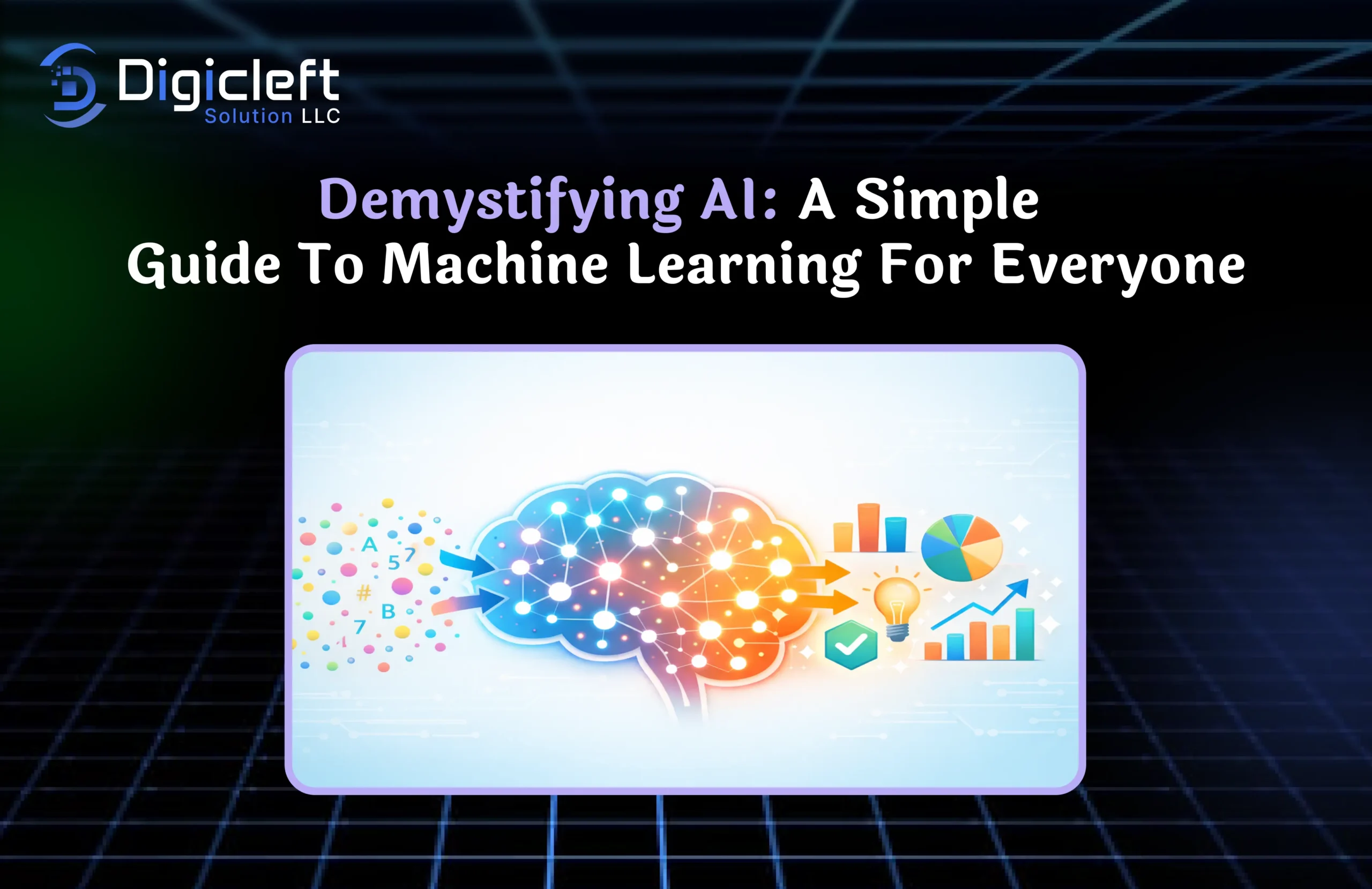
Artificial Intelligence sounds complicated, right? It brings to mind robots, futuristic cities, or perhaps machines taking over jobs. But in reality, AI is simply about computers learning to perform tasks that typically require human intelligence. Think of it like teaching a computer how to recognize patterns, make decisions, or understand language just like we do every day.
Imagine teaching a child how to recognize fruits. At first, they don’t know the difference between an apple and a tomato. But after seeing enough examples, they learn. AI works in a surprisingly similar way.
Why Everyone Is Talking About AI Today
AI is everywhere now from recommendation engines on shopping apps to smart assistants on your phone. Businesses are using it to automate repetitive tasks, improve customer experience, and predict trends. Even small startups are embracing AI because it helps them compete with bigger companies.
And honestly, the buzz isn’t just hype. AI is shaping how we work, communicate, and solve problems.
Understanding Machine Learning Basics
Machine Learning Explained in Simple Words
Machine learning is a branch of AI that focuses on teaching computers through data rather than explicit instructions. Instead of writing thousands of rules, developers give machines examples and let them figure out patterns on their own.
It’s like learning to ride a bike. No one can write a perfect manual explaining balance. You learn by trying, failing, and adjusting — and machine learning works the same way.
AI vs Machine Learning vs Deep Learning
These terms get used a lot, so let’s simplify:
- Artificial Intelligence: The broad concept of machines performing intelligent tasks.
- Machine Learning: A subset where machines learn from data.
- Deep Learning: A more advanced method using neural networks inspired by the human brain.
Think of AI as the big umbrella, machine learning as a branch, and deep learning as a specialized tool.
How Machine Learning Actually Works
Data – The Energy Behind AI
Data is the backbone of machine learning. The more relevant data you provide, the smarter the system becomes. For example, a spam filter learns by analyzing thousands of emails and identifying patterns that indicate spam.
Without data, AI is like a car without fuel — it simply doesn’t move.
Training Models in Simple Terms
Training means feeding data to an algorithm so it can learn patterns. Imagine showing thousands of pictures of cats and dogs to a computer. Over time, it learns to distinguish between them based on shapes, colors, and textures.
Predictions and Learning from Mistakes
Once trained, the model makes predictions. Sometimes it gets things wrong. But here’s the magic — it learns from mistakes and improves. That’s why modern AI keeps getting smarter over time.
Types of Machine Learning
Supervised Learning
In supervised learning, the machine learns from labeled data. For example, if you provide images labeled “car” and “bike,” the system learns to identify them correctly.
Unsupervised Learning
Here, the machine finds patterns without labels. It’s like giving someone a box of mixed puzzle pieces and letting them figure out the grouping themselves.
Reinforcement Learning
This method teaches through rewards and penalties. Think of training a pet — good behavior earns treats, and mistakes lead to corrections. Self-driving cars often use reinforcement learning.
Real-Life Applications of Machine Learning
Everyday Examples You Already Use
- Netflix recommending shows
- Google Maps predicting traffic
- Email apps filtering spam
- Social media suggesting friends
AI quietly works behind the scenes to make your digital experience smoother.
AI in Business and Marketing
Companies use machine learning to analyze customer behavior, personalize advertisements, and predict demand. For example, an online store might predict which products you’re likely to buy next and display them prominently.
Businesses offering services like Digicleft Solutions use AI-driven insights to optimize workflows and boost productivity.
Benefits of Machine Learning
- Automates repetitive tasks
- Improves decision-making
- Enhances personalization
- Reduces operational costs
- Enables predictive analytics
It’s like having an assistant that never sleeps and keeps learning.
Challenges and Common Misconceptions
Despite its benefits, machine learning isn’t magic. Some people believe AI can replace all human jobs — which isn’t accurate. AI works best as a tool that enhances human capabilities rather than replacing them entirely.
Challenges include:
- Data quality issues
- Bias in algorithms
- High computational costs
- Need for skilled professionals
Tools and Platforms for Beginners
- Google Teachable Machine
- TensorFlow
- Scikit-learn
- Microsoft Azure AI
- ChatGPT-based learning platforms
Many of these offer step-by-step tutorials, even if you don’t have a strong coding background.
How Businesses Use AI for Growth
Companies across industries are using AI for growth. Retailers analyze buying behavior. Healthcare providers predict disease risks. Financial institutions detect fraud in real-time.
Even small businesses use AI chatbots to handle customer queries 24/7. Automation frees up time for creative and strategic work.
The Role of Data Privacy and Ethics
As AI grows, so do concerns about privacy and fairness. Responsible AI development includes:
- Transparent algorithms
- Secure data storage
- Ethical decision-making
- Bias reduction strategies
Machine Learning Trends to Watch
- Generative AI creating content
- AI-powered virtual assistants
- Low-code machine learning tools
- Edge computing for faster processing
- Personalized digital experiences
Getting Started with Machine Learning
Here’s a simple roadmap:
- Learn basic programming (Python is popular).
- Understand statistics and data concepts.
- Explore beginner courses online.
- Practice with small projects.
- Join AI communities and forums.
Future of AI for Everyday People
The future of AI isn’t about robots taking over the world. Instead, it’s about making everyday life easier smarter healthcare, efficient transportation, and personalized learning experiences.
Imagine apps that understand your habits and help you stay healthier or tools that assist students in learning complex subjects. AI is becoming a partner rather than just a tool.
Conclusion
Machine learning doesn’t have to feel intimidating. At its core, it’s about teaching computers to learn from data and improve over time. From recommending movies to helping businesses make smarter decisions, AI is already shaping our lives in countless ways.
Understanding the basics empowers you to see opportunities rather than fear complexity. Whether you’re a student, entrepreneur, or curious learner, diving into machine learning opens the door to innovation and creativity. The best part? You don’t need to be a tech genius to get started just curiosity and a willingness to learn.
FAQs
1. Is machine learning difficult to learn for beginners?
Not necessarily. Many beginner-friendly courses and tools simplify complex concepts, making it accessible even without advanced technical skills.
2. Do I need programming skills to start with AI?
Basic programming helps, but some platforms allow you to build AI models using visual tools with minimal coding.
3. How long does it take to understand machine learning basics?
With consistent learning, you can grasp foundational concepts within a few weeks.
4. What industries benefit most from AI?
Healthcare, finance, retail, marketing, education, and logistics are among the industries seeing significant AI adoption.
5. Can small businesses use machine learning effectively?
Absolutely. Even simple AI tools can help small businesses automate tasks, analyze data, and improve customer engagement.