
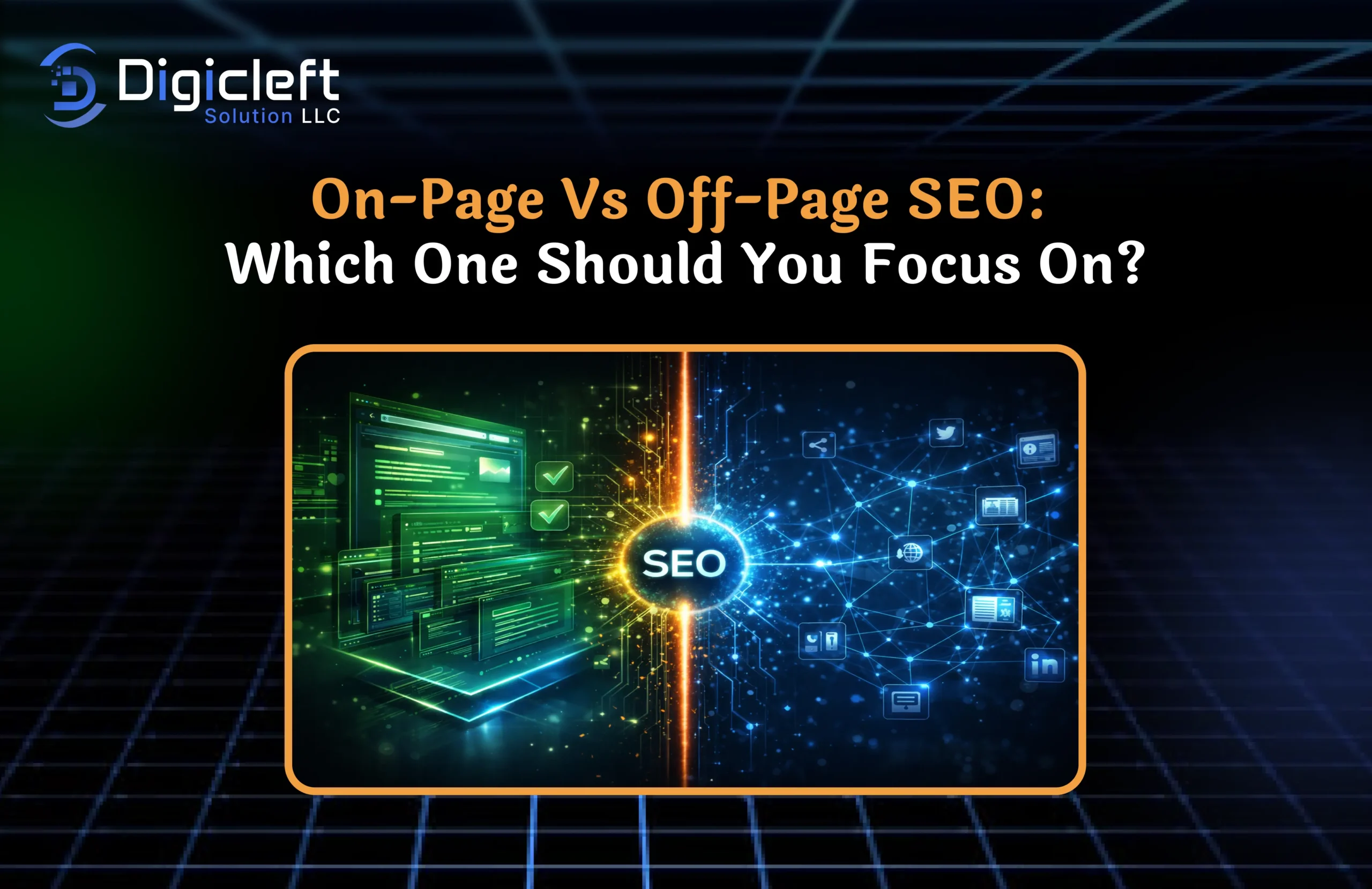
Search Engine Optimization (SEO) is the process of improving your website’s visibility in search engine results. It’s not just about rankings it’s about attracting the right audience, building credibility, and increasing conversions.
SEO works as a long-term digital strategy. Unlike paid ads that stop delivering results when the budget ends, SEO continues to drive organic traffic over time. Studies show that more than 68% of online experiences begin with a search engine, making SEO one of the most valuable marketing channels.
How Search Engines Rank Websites
Search engines use complex algorithms to determine which pages deserve top positions. These algorithms evaluate hundreds of ranking factors, mainly divided into two categories:
- On-Page SEO: Elements within your website
- Off-Page SEO: External signals and authority factors
What is On-Page SEO?
On-page SEO refers to everything you can control directly on your website, including content quality, structure, and technical elements that help search engines understand your page, ensuring effective optimization.
Core Elements of On-Page SEO
1. Content Optimization
High-quality content is the foundation of on-page SEO. It should be relevant, informative, and aligned with user intent.
- Clear heading structure (H1, H2, H3)
- Natural keyword placement
- Readable formatting
- Engaging and informative writing
2. HTML & Technical Structure
A well-optimized page includes strong technical foundations:
- Title tags and meta descriptions
- Proper heading hierarchy
- SEO-friendly URLs
- Image optimization (alt text)
- Fast loading speed
Key On-Page SEO Techniques
Keyword Placement Strategy
Use keywords naturally in strategic positions:
- Title tag
- First 100 words
- Headings
- Image alt text
Avoid keyword stuffing. Focus on how users search and match their intent.
Internal Linking & User Experience
Internal links help search engines crawl your website and improve navigation. A well-structured site keeps users engaged longer, which positively impacts rankings.
What is Off-Page SEO?
Off-page SEO includes actions taken outside your website to improve authority, trust, and rankings. It reflects how others perceive your website.
Core Elements of Off-Page SEO
1. Backlinks
Backlinks are links from other websites pointing to your site. They act as trust signals for search engines.
High-quality backlinks from authoritative sites significantly improve rankings.
2. Brand Signals
Search engines consider brand mentions, reviews, and social presence—even without direct links.
Key Off-Page SEO Strategies
- Guest blogging
- Outreach campaigns
- Digital PR
- Broken link building
Focus on quality over quantity. A single high-authority backlink can outperform multiple low-quality links.
Social & Authority Signals
Social media does not directly impact rankings but increases visibility and traffic, indirectly boosting SEO performance.
On-Page vs Off-Page SEO Comparison
| Factor | On-Page SEO | Off-Page SEO |
|---|---|---|
| Control | Fully controllable | Limited control |
| Focus | Website optimization | External authority |
| Key Element | Content & structure | Backlinks & reputation |
| Speed | Faster results | Slower results |
| Long-Term Impact | High | Very high |
Which SEO Strategy Should You Focus On First?
For New Websites
Start with on-page SEO. Without a strong foundation, off-page efforts will not deliver results effectively.
For Established Websites
If your website already has optimized content and structure, focus on off-page SEO to build authority and scale traffic.
How to Balance On-Page and Off-Page SEO
Effective SEO requires a balanced approach:
- Start with strong on-page optimization
- Gradually build backlinks
- Update content regularly
SEO is an ongoing process, not a one-time task.
How to Create Engaging and Intuitive Websites for Maximum Impact Digicleft Solution
Ranking is important, but conversions matter more. A well-designed website ensures visitors take action.
Digicleft Solution focuses on creating high-performance websites that combine SEO and user experience.
Key Elements Include:
- Clean UI/UX design
- Fast loading speed
- Mobile responsiveness
- Clear call-to-action (CTA)
- Problem-solving content
When SEO meets intuitive design, your website not only ranks but also converts visitors into customers.
Conclusion
On-page and off-page SEO are both essential for achieving sustainable growth.
- On-page SEO builds the foundation
- Off-page SEO builds authority
For best results, focus on both but prioritize based on your website’s current stage.
FAQs
1. Can I rank with only on-page SEO?
Yes, but mainly for low-competition keywords. Competitive niches require off-page SEO.
2. How long does off-page SEO take?
Typically 3–6 months, depending on competition and strategy.
3. Which is more important?
Both are equally important, but on-page SEO should come first.
4. Is link building still relevant in 2026?
Yes, backlinks remain one of the top ranking factors.
5. How often should I update on-page SEO?
Update content every few months to maintain rankings and relevance.