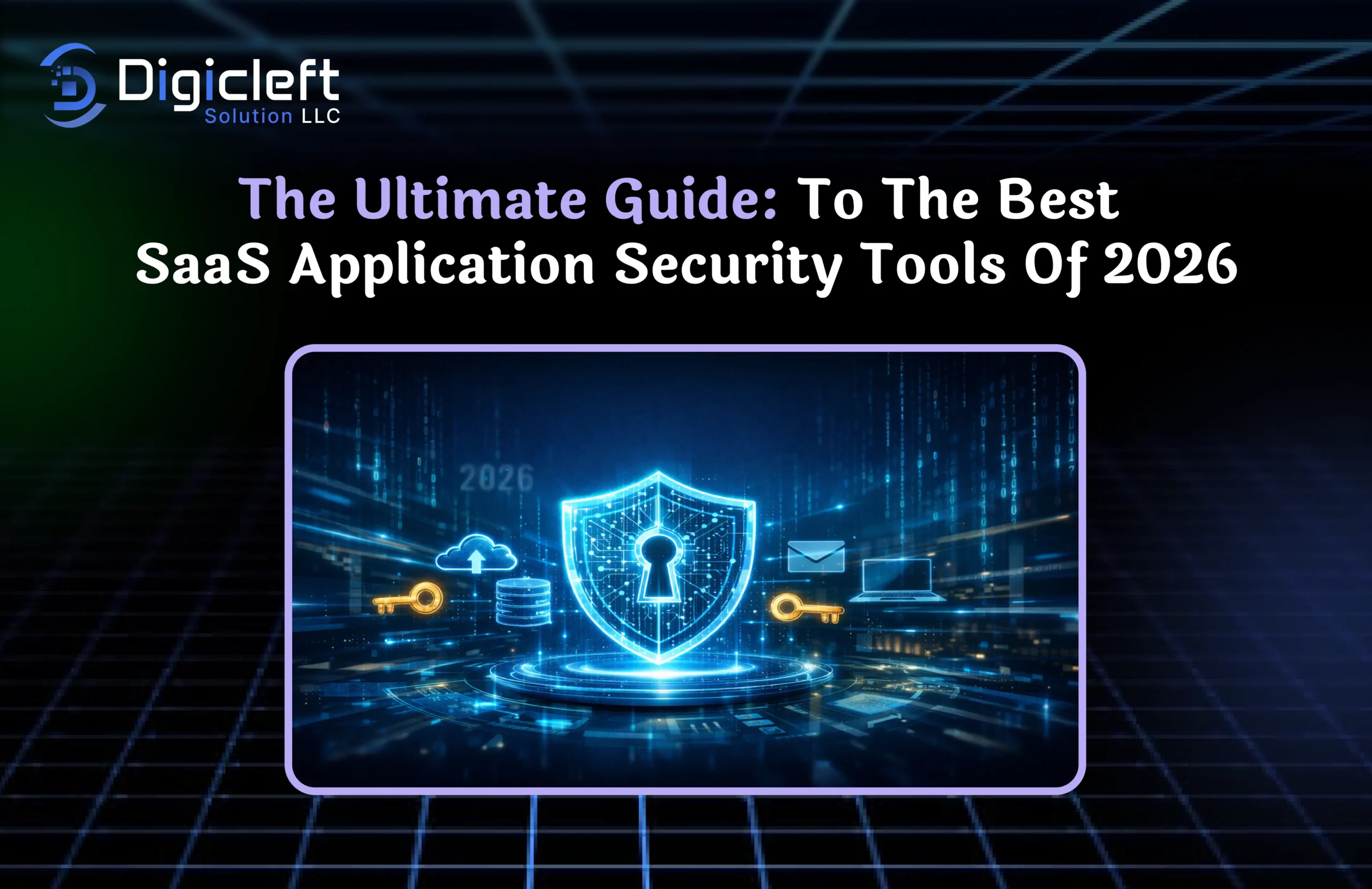
In today’s world, where In today’s world, where everything from team messaging to mission-critical business systems, security isn’t a luxury it’s the foundation. Every it’s product you use or build exposes an attack surface that threat actors constantly scan for weaknesses.
everything from team messaging to mission-critical business systems, security isn’t a luxury it’s the foundation. Every SaaS product you use or build exposes an attack surface that threat actors constantly scan for weaknesses.
From misconfigured third-party integrations to brute-force login attempts and API abuse, the risks it’s operations face are serious. That’s exactly why this guide exists to walk you through the most important, relevant, and forward-looking SaaS operation security tools of 2026 and help you build a real-world defense strategy.
This guide also explores how digicleft solution fits into modern security stacks offering a scalable, context-aware strategy that complements today’s top it’s security platforms.
Why SaaS Operation Security Matters More Than Ever
Your login systems, APIs, cloud integrations, data flows, and users all create potential entry points. A small misconfiguration or missing MFA can quickly turn into a breach.
Modern SaaS security focuses on:
- Zero Trust Access Controls – Never trust, always verify users and sessions.
- Real-Time Threat Detection – AI-powered anomaly and breach detection.
- Posture Management – Continuous scanning for misconfigurations.
- Identity & Access Management (IAM) – Strong authentication and authorization.
- Data Loss Prevention (DLP) – Protecting sensitive data even after compromise.
What to Look for in SaaS Operation Security Tools
- Comprehensive Visibility – Full view of apps and data flows.
- Behavioral Analytics – Detection of unusual patterns.
- Automation – Automatic policy enforcement.
- DevSecOps Integration – Seamless CI/CD compatibility.
- Compliance Readiness – SOC 2, ISO 27001, PCI DSS alignment.
Top SaaS Operation Security Tools of 2026
1. :contentReference[oaicite:0]{index=0} Cloud-Native SaaS Protection
- Detection of unsanctioned apps
- Real-time Data Loss Prevention (DLP)
- Dynamic policy enforcement
- API protection with Zero Trust
Best for: Organizations with heavy it’s adoption and compliance needs.
2. :contentReference[oaicite:1]{index=1} SaaS Posture & Configuration Guardian
- Configuration drift detection (Salesforce, Office 365, etc.)
- Automated remediation guidance
- Cross-platform compliance monitoring
Best for: Security teams needing deep configuration insights.
3. :contentReference[oaicite:2]{index=2} Behavioral Intelligence for SaaS
- Behavior-based anomaly detection
- API-driven visibility
- Unified governance tools
Best for: Real-time behavioral threat detection.
4. :contentReference[oaicite:3]{index=3} Edge Security & Zero Trust Access
- Application firewalling
- Identity-based access controls
- DDoS and bot mitigation
Best for: Web-facing SaaS applications.
5. :contentReference[oaicite:4]{index=4} Cloud-Native Visibility & Risk Prioritization
- Misconfiguration detection
- Identity risk analysis
- Exposed data monitoring
- Agentless deployment
Best for: Hybrid and complex cloud environments.
6. :contentReference[oaicite:5]{index=5} Zero Trust Network Security
- Zero Trust Exchange enforcement
- Continuous traffic inspection
- Cross-device data protection
Best for: Remote teams and distributed enterprises.
7. :contentReference[oaicite:6]{index=6} AI-Powered Detection & Response
- AI-driven threat detection
- Identity anomaly alerts
- Unified endpoint and SaaS telemetry
Best for: Advanced detection and incident response.
8. digicleft solution Contextual Risk Engineering
Rather than replacing tools, digicleft solution orchestrates signals from SSPM, CASB, and identity platforms to provide context-aware risk scoring and automated remediation.
Best for: Security-mature organizations building intelligent, business-aware defense systems.
Best Practices for Layered SaaS Security
- Layer edge and internal visibility tools.
- Automate posture checks continuously.
- Combine Zero Trust with DLP and CASB policies.
- Integrate security into CI/CD pipelines.
- Use contextual risk engines for prioritization.
Final Thoughts: Building Resilient SaaS Security in 2026
2026 marks a turning point for SaaS security. Platforms like Netskope, CrowdStrike, and AppOmni form critical pillars. Add a contextual strategy like digicleft solution, and you move from reactive defense to proactive protection.
Secure SaaS isn’t about reacting after a breach it’s about identifying risks before they identify you.
FAQs
1. What’s the difference between SSPM and CASB?
SSPM focuses on posture management and configuration risk, while CASB enforces policies between cloud services and users.
2. Are these tools suitable for startups?
Yes, tools like Cloudflare offer scalable entry points. Enterprise platforms may better suit larger organizations.
3. How does Zero Trust improve SaaS security?
Zero Trust verifies every request reducing credential abuse and lateral movement.
4. Can these tools replace security teams?
No. They enhance human expertise but do not replace skilled analysts.
5. What should I prioritize first?
Start with visibility and access controls you cannot secure what you cannot see.